


The town that gave Wales its national anthem is one of just 15 still in the running for the 2028 title. With £3 million for the winner, the bid could bring new audiences to Pontypridd and give more local people the chance to make culture of their own.
The next time you hear Hen Wlad Fy Nhadau ringing around the Principality Stadium, spare a thought for the town where it began. In 1856, James James wrote the tune in Pontypridd and his father, Evan, supplied the words. Nearly 170 years later, the town has a chance to share another chapter of its story with the rest of the UK. Pontypridd has made the shortlist to become the country’s first Town of Culture in 2028, and its full bid is due on Monday, 30 November.
Pontypridd is one of 15 places selected from 398 applications and one of two Welsh towns still in contention, alongside Port Talbot. Both are in the medium town category, with Corby, Great Yarmouth and Leith. One finalist will come from each of the three size categories before an overall winner is chosen. The UK Government’s timetable puts the finalists’ announcement in February 2027 and the winner’s announcement by the end of March.
What would winning mean for Pontypridd?
The winner will receive £3 million to put on around six months of cultural activity in 2028. The other two finalists will each receive £250,000 to deliver parts of their bids. Pontypridd has already received a £60,000 development grant for reaching the shortlist. That money helps the local team consult residents and work up a full proposal. The competition, inspired by UK City of Culture, gives towns a dedicated opportunity to tell their stories and widen access to the arts.
There’s a good indication of what a major cultural event can do for the town centre. When the National Eisteddfod came to Ynysangharad War Memorial Park in August 2024, the council recorded 186,012 visits to the town centre over eight days, almost 120,000 more than the previous week. That was a measure of town-centre footfall. It gives a sense of how much busier the streets around the festival became, and why market traders, cafés and independent shops have a stake in what happens next.
A programme spread over six months could give people several reasons to come back. Someone drawn in by a gig at Y Muni might return for an exhibition, bring the family to the lido or spend a Saturday exploring the market and museum. A programme with events at different times of day and at different venues could spread that extra trade across the town centre and give smaller businesses more opportunities to benefit.

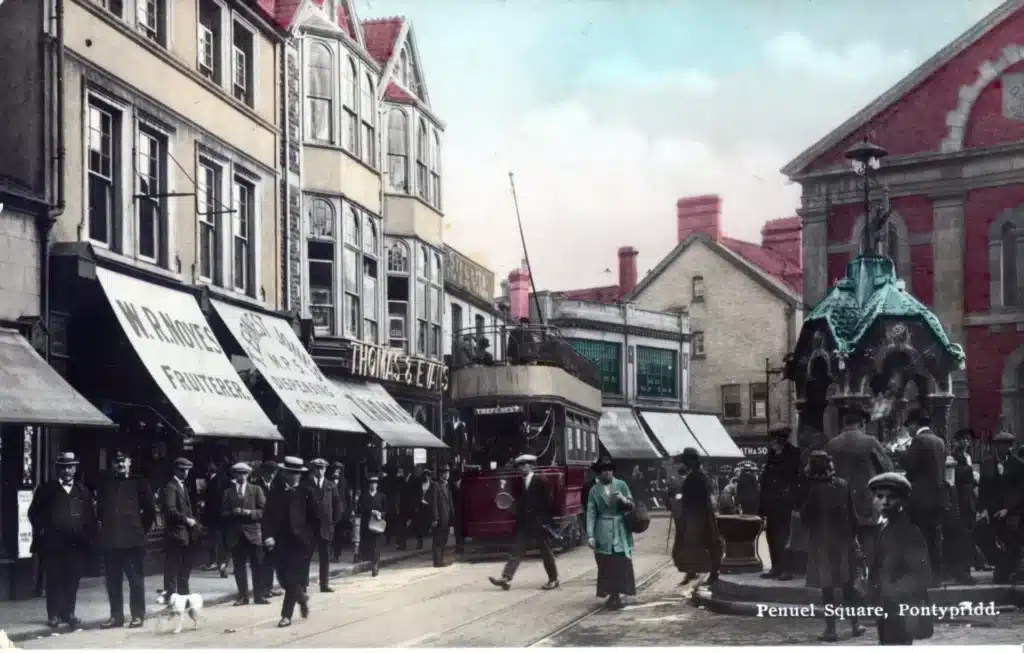
A bid shaped in the market and across the town
The bid, known as Pontypridd28, brings together Rhondda Cynon Taf Council, Pontypridd Town Council and the Pontypridd Town and Culture Partnership. Its cultural hub opened in Penuel Arcade inside the indoor market, where people could drop in and share their ideas. The team has also held community dinners across the town’s ten electoral wards, worked with schools and a youth panel, and gathered views through community station GTFM. Sight Life and Pontypridd Deaf Club were among the groups consulted. rctcbc.gov.uk
Those conversations matter because residents will experience the programme in different ways. For a young musician, the opportunity might be a first paid performance. For a school, it could be a chance to work with a local artist. For an older resident, it might mean sharing memories of the town before those stories are lost. Affordable tickets, accessible venues and events close to home would help more people take part.
What could last beyond 2028?
Pontypridd already has venues and groups that could carry work forward. Y Muni, a former Wesleyan chapel, reopened in 2024 after more than five years. There’s Welsh-language social and cultural life at Clwb y Bont, community arts at YMa and space for artists at Penuel Lane Studios. The town’s newer festivals include Gŵyl Morfydd, celebrating the Treforest-born composer Morfydd Owen. A successful bid could give these organisations room to try new work, reach people who have never been through their doors and build partnerships they can use again.
The most telling signs of success might come in 2029. Is a youth group still putting on gigs? Did a trader who saw new faces during the programme see them again the following spring? Has a visitor who came for one big weekend made Pontypridd a regular stop? The title would bring national attention. What residents and businesses can build from it, once the crowds have gone home, is the reason this bid matters. Follow the bid HERE.
Ten Things You May Not Know About Pontypridd
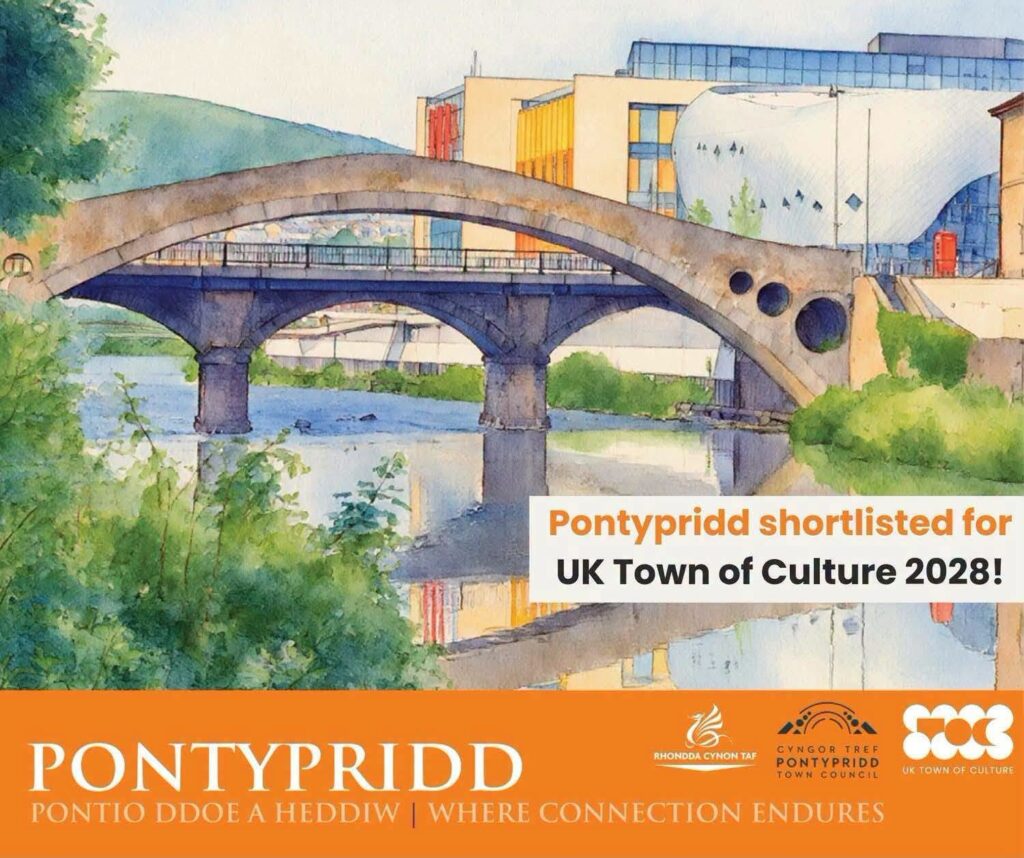
- The holes in the Old Bridge have a job to do. The three circular openings of different sizes at each end of William Edwards’ 1756 bridge reduce the weight of the stonework. The single arch spans about 43 metres across the Taff.
- Pontypridd used to be called Newbridge. The town was known as Newbridge until the 1860s. The railway held on to the name longer, and Newbridge Station officially became Pontypridd in 1891.
- The Welsh anthem had a different name. Hen Wlad Fy Nhadau was originally called Glan Rhondda. Pontypridd singer Elizabeth John gave its first performance in the vestry of Capel Tabor in Maesteg in 1856.
- The railway station once had a world record. According to the Royal Commission’s Coflein archive, Pontypridd’s main island platform was the longest in the world when it was built. At its peak, the station had seven platforms.
- Pontypridd helped equip Brunel’s steamships. The Brown Lenox chainworks made anchors for Isambard Kingdom Brunel’s Victorian steamships. The works opened in 1818 and remained in the town until 2000.
- The town museum still has its chapel organ. Pontypridd Museum occupies the former Tabernacl Welsh Baptist Chapel, built in 1861. The building opened as a museum in 1986 and retains its pipe organ and ornate interior.
- A Pontypridd swimmer was the first from Wales to cross the English Channel. Jenny James completed the swim in 13 hours and 55 minutes in 1951. She worked as a swimming coach and lifeguard at the lido, where a blue plaque now honours her.
- Sir Tom Jones was a lido regular before he found fame. The open-air pool was built in 1927 with a design that brought a touch of the Mediterranean to the Valleys. It turns 100 in 2027.
- Treforest produced a remarkable composer. Morfydd Llwyn Owen, born there in 1891, was a composer, singer and pianist who won the Caradog Music Scholarship. She died aged 26, and a local festival now celebrates her life and work.
- A Valleys novelist gave the town an unexpected nickname. Gwyn Thomas described Pontypridd, which sits where the Taff and Rhondda rivers meet, as the “Damascus of the Valleys”.