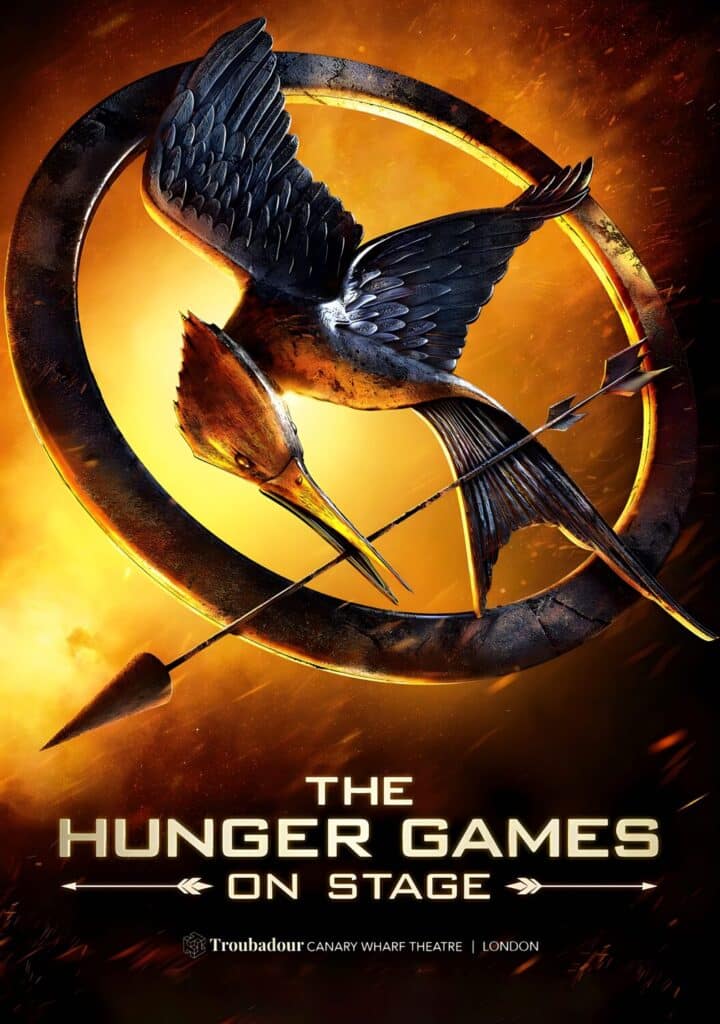

A spectacular London production, a new company and a South Wales connection gave us plenty to discover when we visited The Hunger Games: On Stage and met swing and fight captain Rhodri Watkins.
There are some stories you approach with a fairly clear idea of what you are going to get. Having read the book or watched the film, you know the characters, remember the big moments and arrive wondering how a theatre production could possibly bring that world to life.
Then you enter the arena.
Our visit to The Hunger Games: On Stage delivered that wonderful feeling of recognising a story while experiencing it afresh. The production captured the elements that made Suzanne Collins’ book and its screen adaptation so compelling, yet created something with its own theatrical identity. The danger, emotion and spectacle were familiar, but their impact changed when they unfolded in a shared space, with live performers at the centre.
We also went to interview Rhodri Watkins, who comes from South Wales and whose early training connections are rooted here. His involvement offers a particularly interesting way into a production that depends as much on precision and teamwork as it does on its leading characters.
A setting that becomes part of the story
Before discussing Katniss, the cast or the action, we need to talk about the venue. It makes an enormous difference.
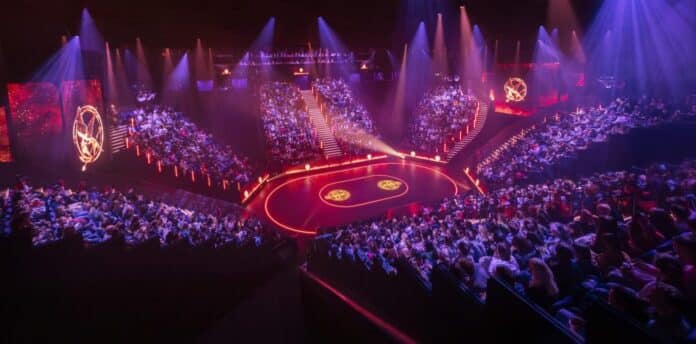
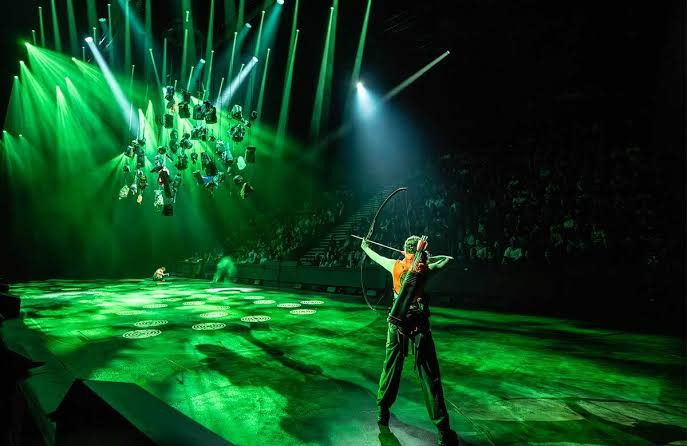
The Troubadour Canary Wharf Theatre is a purpose-built, 1,200-seat venue on Water Street in London’s Docklands. Its auditorium places the production in an arena setting, with audiences surrounding the action. This is a theatre designed to accommodate the scale and demands of this particular show.
That matters because an arena is fundamental to The Hunger Games. The story asks uncomfortable questions about watching, entertainment and the way human suffering can be packaged as a public spectacle. Here, the audience’s position gives those ideas an immediate physical presence.
We are watching the Games. We can also see other people watching the Games.
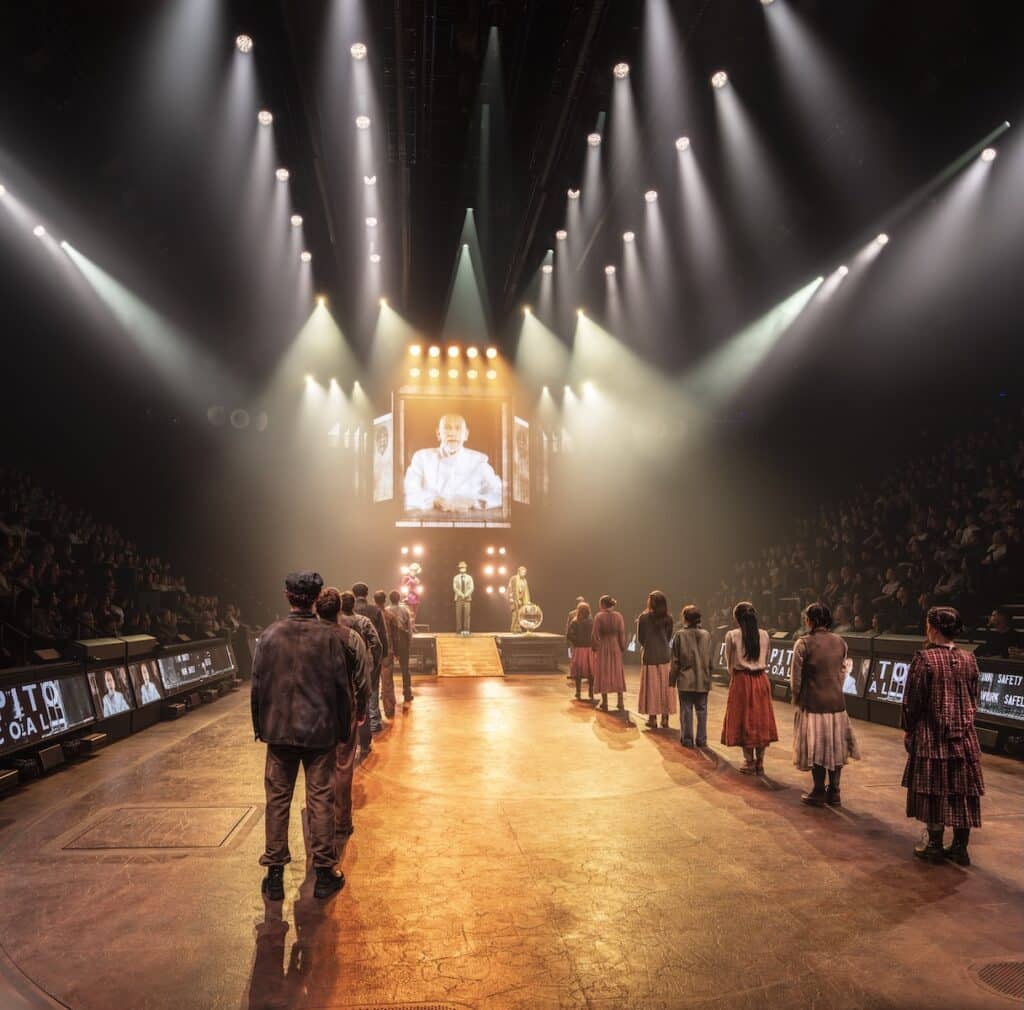
That simple relationship adds something a cinema screen cannot quite offer. The spectators become part of the visual picture, making the production’s setting feel integral to its storytelling.
Outside, Canary Wharf provides another striking layer. The water, modern architecture and surrounding towers give the journey to the theatre a very different character from an evening among the familiar playhouses of the West End.
There is an interesting resonance between this landscape of wealth and power and the world we are about to enter. That is our reading of the setting, of course, but it contributes to the atmosphere. By the time you take your seat, you have already begun to leave an ordinary theatre trip behind.
Familiar territory, freshly imagined
Adapted by Conor McPherson and directed by Matthew Dunster, the production draws on Collins’ first novel and the Lionsgate film. It follows Katniss Everdeen as her decision to protect her younger sister takes her into a brutal competition controlled by the Capitol.
For anyone coming to the story for the first time, the premise is chilling: young tributes are selected from Panem’s districts and forced to fight for survival while their ordeal becomes entertainment.
For established fans, the challenge is different. Can an adaptation preserve the story’s emotional pull while finding a theatrical language of its own?
For us, that was where this production succeeded.
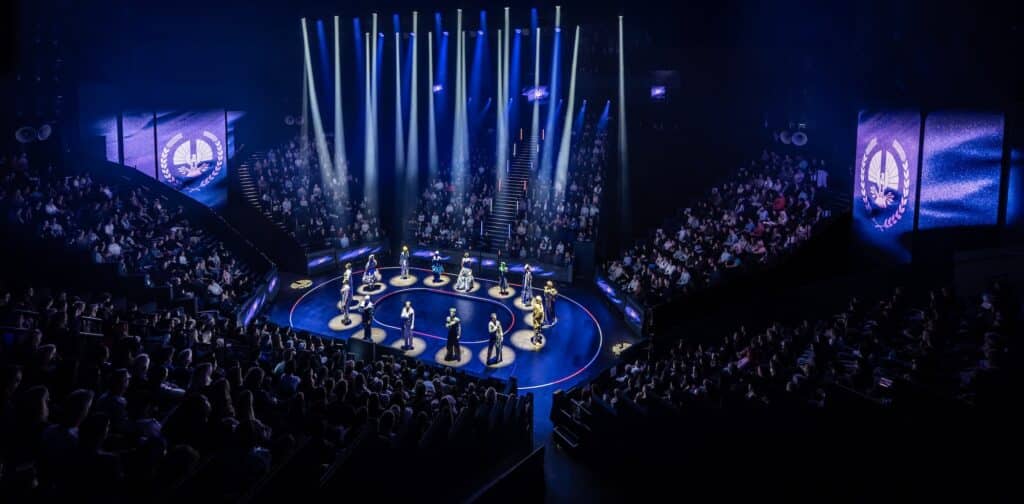
It retained the essential relationships, the cruelty of the Games and the sense of a young woman being pushed into circumstances she never chose. There was the recognition that comes with revisiting a much-loved story, alongside the pleasure of discovering how it could work in a different medium.
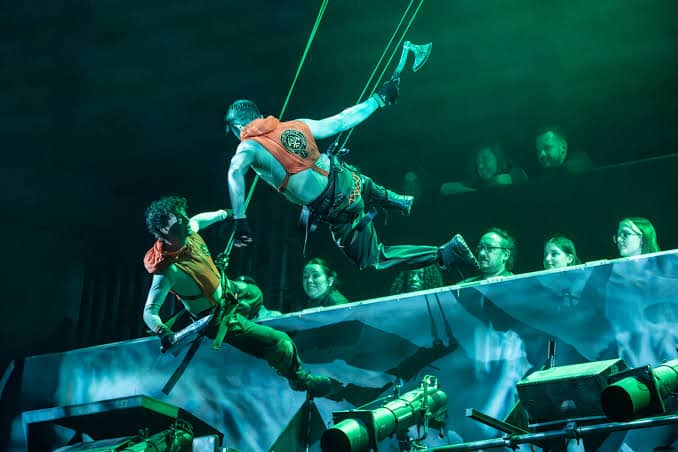
The live setting changes our relationship with danger. On film, editing can control exactly where we look and how quickly an event passes. In a theatre, we share time and space with the performers. Their physical effort is part of what we experience.
The production’s use of stunts and illusions serves a story already built around manipulation and manufactured spectacle. It gives the action scale without removing the people at its centre.
What stayed with us was that balance. The excitement mattered because the characters mattered. Beneath the machinery of the Games was the simple, painful desire to survive and return home.
A new company enters Panem
The production has now entered its second year, with a new company beginning performances on 23rd October 2026.
Elizabeth Anderson takes on Katniss Everdeen, alongside Vinnie Copeland as Peeta Mellark and Nathan Stokes as Gale Hawthorne. Neil McDermott plays Haymitch Abernathy, while Daniel Brocklebank takes on the Capitol’s television host, Caesar Flickerman.
The company also includes Daisy Statham as Prim, Alix Dunmore as Mrs Everdeen, Isabel Della-Porta as Effie Trinket and Theo Ogundipe as Cinna. John Malkovich continues to appear on screen as President Snow.
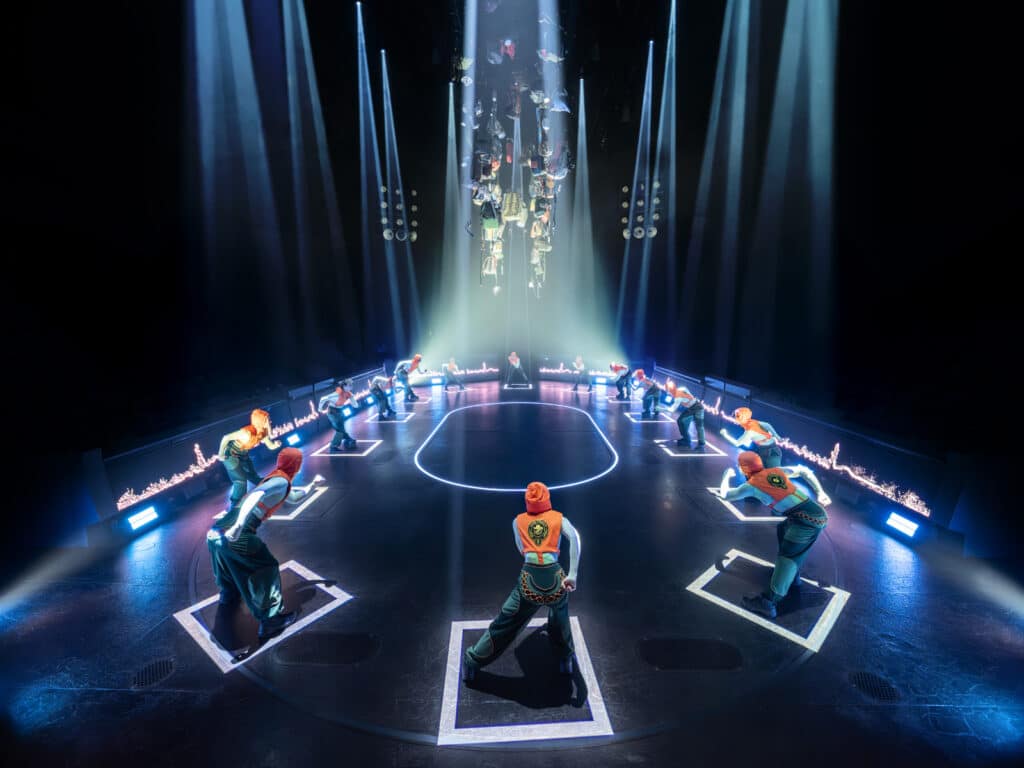
A cast change provides a fresh reason to visit an established production, but this is also a show in which the wider company is crucial. Its world needs to function collectively, with each performer contributing to the momentum and clarity of the storytelling.
That brings us to Rhodri.
South Wales talent behind the action
Meeting Rhodri Watkins gave our visit a welcome connection to home, while drawing attention to one of theatre’s most demanding jobs.
His official credit is offstage swing and fight and flight captain, a combination that immediately suggests the breadth of responsibility involved.
A swing learns multiple performance tracks and is ready to cover different members of the company. That means retaining much more than dialogue. Movement, positioning, entrances, exits and the precise relationship with everyone else on stage all form part of the job.
In a production built around physical action, that adaptability is especially significant.
The audience needs to believe in the danger while the performers work within carefully rehearsed structures. Fight and flight captaincy adds responsibility for helping maintain that physical work, supporting the consistency and discipline on which the spectacle depends.
It is a useful reminder that a programme credit can contain an enormous amount of unseen work.
Rhodri’s journey from South Wales to this London arena also gives the feature a broader significance for readers at home. Alongside his South Wales roots and early training, his professional background includes training at Laine Theatre Arts and credits in productions including Flashdance and Mamma Mia!.
There is something particularly satisfying about seeing talent with a connection to our region contributing to an ambitious production on this scale. His role illustrates the range of careers available in theatre, including those requiring performers to combine versatility with considerable technical knowledge.
Our verdict: a story worth experiencing again
What we enjoyed most was the confidence with which The Hunger Games: On Stage embraced theatre.
It understood the appeal of the book and film, preserving the ingredients that audiences would hope to find, while giving us a new way to engage with them. The arena, the performers and the audience’s relationship with the action all helped make the experience distinctive.
The venue was central to that achievement. Seeing this story surrounded by other spectators gave its themes an extra edge. The scale supported the spectacle, but the shared space also brought us closer to the human stakes.
Our visit combined the pleasure of returning to a familiar world with a greater appreciation of the work involved in creating it. Meeting Rhodri added another dimension, directing our attention towards the skill and preparation that allow such an ambitious show to happen.
For fans considering whether a story they already know can still surprise them, our experience suggests that it absolutely can.
We went to London to meet a performer from South Wales and see how Panem would translate to the stage. We came away impressed by a production that understood its source material and found an exciting theatrical life of its own.
The Hunger Games: On Stage is performed at Troubadour Canary Wharf Theatre, Water Street, London E14 5GX. The running time is approximately two hours and 30 minutes, including an interval, and the recommended age is 12+. For performance dates and bookings go HERE.